


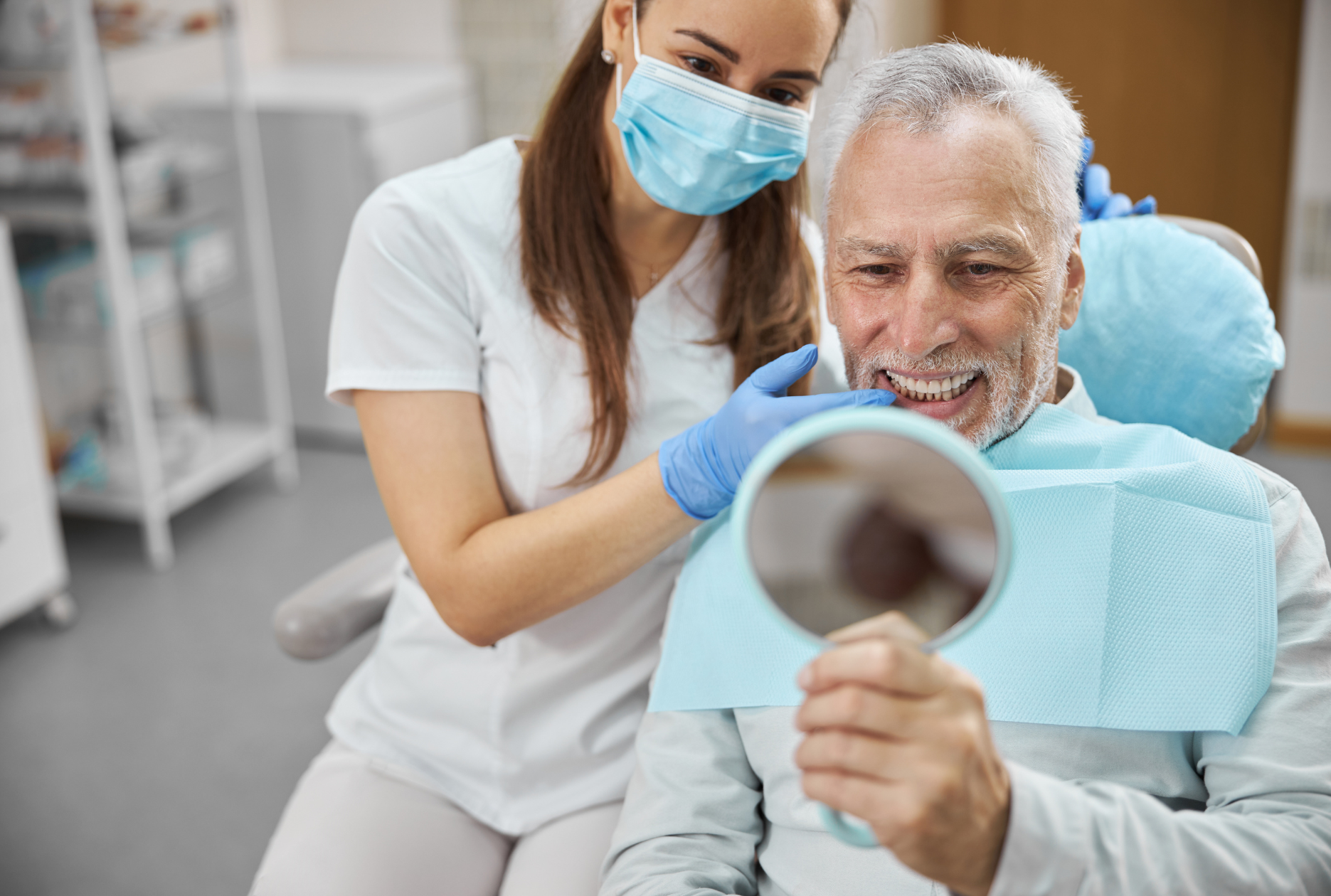
The appointment is done. Your implant is in, the numbness is starting to fade, and you’re at home with a slightly odd feeling in your jaw and a head full of questions. What’s normal? What isn’t? When can you eat something that isn’t soup?
Good news first. Dental implant recovery tends to be far more boring than people expect, and boring is exactly what you want. Most of it is a few quiet days, some sensible eating, and then a lot of waiting around while your jawbone quietly gets on with the clever part.
Still, knowing what to expect after dental implant surgery makes those first days much easier to relax into, so here’s the honest version, start to finish.
Dental Implant Recovery: The First 48 Hours
These first two days are when you’ll notice the most, because this is when your body is doing its most visible work.
Expect some swelling around the cheek or jaw. It often gets worse before it gets better, peaking around day two or three, which catches people out. You wake up on the second morning puffier than the night before and assume something’s gone wrong. Nothing has. That’s just the normal shape of the curve.
Bruising can turn up too, sometimes a day late to the party, occasionally drifting down towards the neck. Looks worse than it feels. There’ll be tenderness around the site, and on the first day you might notice slight oozing of blood mixed with saliva, which always looks more dramatic than it is. Biting gently on the gauze from your dentist for twenty minutes or so usually settles it.
A few things genuinely help in this window:
- A cold compress against the cheek, roughly ten minutes on and ten off, through the first day. A bag of frozen peas wrapped in a tea towel does the job perfectly well
- Pain relief as your dentist has advised, taken before the ache builds rather than once it has. Staying ahead of it matters more than people realise
- Rest. Actual rest, with your head propped slightly up when you lie down, since lying flat can make the throbbing more noticeable
- No hot drinks, no alcohol, no smoking or vaping. All of them interfere with early healing, and smoking in particular is one of the biggest threats to a new implant
- No forceful spitting, no vigorous rinsing, and no straws on day one. The suction can disturb the site just as it’s trying to settle
Book the procedure before a quiet weekend if you can.
Most patients don’t need long to recover, but having nowhere to be for a couple of days takes all the pressure off. And honestly, the thing we hear most often at review appointments in our Woking practice is some version of “that was much easier than I’d expected”.
People brace for a terrible week. It almost never arrives.

What Can You Eat After Dental Implant Surgery?
Soft and cool, for the first few days. Yoghurt, smoothies eaten with a spoon rather than sucked through a straw, scrambled eggs, mashed potato, porridge once it’s cooled down, soup that’s warm rather than hot. Chew on the other side of your mouth and keep food away from the surgical site as much as you reasonably can.
Temperature matters more than people expect in the early days.
Very hot food and drink can encourage bleeding, and the area may be a bit sensitive to extremes either way. Lukewarm is your friend for a bit. Your morning coffee doesn’t have to disappear, it just needs to cool down first.
From around day three or four, start reintroducing firmer food gradually, letting comfort be your guide. Pasta, fish, well-cooked vegetables, bread without a tough crust. Anything hard, crunchy or full of small seeds should stay away from the site for longer, because fragments have a talent for finding their way exactly where you don’t want them.
When does eating go fully back to normal? There’s no fixed date, and anyone who gives you one is guessing. Many patients are eating more or less normally within a week or two, with the surgical site getting a wide berth for a while longer.
Your dentist will tell you what’s sensible for your case at your follow-up, and that advice beats anything written in a blog, including this one.
How to Clean Your Mouth After a Dental Implant
Here’s the balancing act: a clean mouth protects your implant, and an undisturbed site heals fastest. You need both at once.
The rest of your mouth carries on as normal. Brush your other teeth from day one, same as always. Around the implant itself, follow whatever your dentist has told you, which typically means steering clear of the site for the first day or so, then easing back in with a very soft touch as things settle.
From the day after surgery, gentle warm salt water rinses after meals help keep the area clean. Half a teaspoon of salt in a glass of warm water, swirled softly, then let it fall out of your mouth rather than spitting. It tastes about as glamorous as it sounds. It works, though, and it’s been standard aftercare advice for good reason.
Some patients are also given an antiseptic mouthwash to use for a set period. Follow the instructions exactly, even once things feel fine.
One more thing, and everyone does it: leave the site alone. No exploring with your tongue, no checking with a finger, no peering at it in the mirror six times a day while pulling your cheek out of the way. Curiosity is natural. The implant heals best without an audience.

How Long Does a Dental Implant Take to Heal?
Time for one piece of jargon, because your dentist will use it and it deserves a plain explanation: osseointegration.
Your implant is a small titanium post sitting in your jawbone. Over the weeks and months after placement, the bone gradually grows onto and around its surface until the two are effectively fused. That’s osseointegration, and it’s the entire reason implants feel and function like natural teeth rather than something bolted in.
Bone grows slowly, so this part cannot be hurried, no matter how patient or healthy you are.
The healing you can see happens quickly. Gum tissue usually settles within a week or two, and stitches either dissolve on their own or are removed at your review appointment. You might feel the stitches with your tongue before then, slightly stiff, like tiny bits of thread. Normal, and another thing best left unpoked.
The healing you can’t see takes longer. Full integration commonly lands somewhere between three and six months, depending on bone quality, where in the jaw the implant sits, your general health and a handful of other factors your dentist weighs up.
Lower jaw placements often integrate a little faster than upper ones, since the bone there tends to be denser, though your own timeline is your dentist’s call.
Once integration is confirmed, your final crown or bridge goes on. That’s the finish line, and every sensible choice you make in these early days is protecting it.
The full journey from consultation to final fit is laid out on our dental implant treatment page if you want the wider picture.
What’s Normal After Dental Implant Surgery (and What Isn’t)
Most of what you’ll experience belongs firmly in the expected column. Swelling for a few days. Some bruising. Tenderness, a feeling of tightness around the site, slight oozing on day one, mild discomfort that responds to ordinary pain relief and fades a little more each day. All routine.
A shorter list of things sits outside normal healing, and each one is a reason to pick up the phone:
- Pain that gets worse after day three or four instead of easing
- Swelling that keeps growing once it should have peaked
- Bleeding that won’t settle with gentle pressure on gauze
- A fever, or a persistent bad taste or discharge from the site
- Any sense that the implant itself feels loose
- Numbness or tingling in the lip, chin or tongue that lingers well beyond the anaesthetic wearing off
Ringing the practice about any of these doesn’t mean something has gone wrong. Usually it hasn’t. It means your dentist takes a quick look, either reassures you or catches something early, and both outcomes are wins.
We’d far rather hear from a patient about something that turns out to be nothing, and after more than 60 years looking after patients in Woking, we’ve happily reassured plenty of both kinds of caller.
Frequently Asked Questions
How long does swelling last after a dental implant?
Swelling usually peaks around two to three days after surgery, then eases steadily. Most patients find it has largely gone within a week, though everyone heals at their own pace, and a cold compress in the first 24 hours helps keep it down.
When can I eat normally after implant surgery?
Soft foods for the first few days, then a gradual return based on comfort. Many patients are eating fairly normally within a week or two, keeping hard and crunchy foods away from the site until their dentist gives the all-clear.
How long until the final tooth goes on the implant?
Usually once the implant has fully fused with the bone, which commonly takes three to six months. Your dentist will confirm the timeline for your case, and depending on your treatment plan, a temporary tooth may be worn in the meantime.
Can I brush my teeth after implant surgery?
Yes, and please do. Brush the rest of your mouth normally from day one, avoid the implant site itself at first, and follow your dentist’s guidance on when and how to start cleaning gently around the area.
How long should I take off work after dental implant surgery?
Plenty of patients with a straightforward single implant are back at work within a day or two, especially in desk-based jobs. Physically demanding work may need a little longer. Ask your dentist for advice based on your treatment and what your job actually involves.
This article is for general information only and doesn’t replace professional dental advice. Healing varies between patients, and the aftercare instructions given by your own dentist always take priority over general guidance. Contact your dental practice about any symptoms that concern you.
Questions About Your Recovery? Just Ask
Recovery goes best when you know what’s normal and you’re never left guessing. Bradstowe Dental patients can call us on 01483 761 784 with any concern, however small it seems at the time.
And for anyone still deciding whether implants are right for them, we offer a free consultation where you can ask about the procedure, the recovery and everything in between, with no pressure attached.
Bradstowe Dental Practice is registered with the Care Quality Commission (CQC).