


If you’re thinking about whitening your teeth, or you’ve just had it done, the question on your mind is probably pretty simple: how long will this actually last?
It’s a fair question, and it deserves a straight answer.
Professional whitening done at a dental practice can last anywhere from one to three years. Take-home kits prescribed by your dentist tend to last six to eighteen months. The strips you pick up at a pharmacy? Around four to six months, if you’re lucky.
But here’s the thing: how long your results last depends just as much on what you do after treatment as the treatment itself.
This guide walks you through what to expect, what to avoid, and how to keep your smile looking bright for as long as possible.
If cost is also on your mind, we have a separate guide on how much teeth whitening costs in the UK.
How Long Does Teeth Whitening Last, By Treatment Type?
Not all whitening is the same. The method matters a lot when it comes to how long your results hold.
In-chair whitening at the dentist: 1-3 years
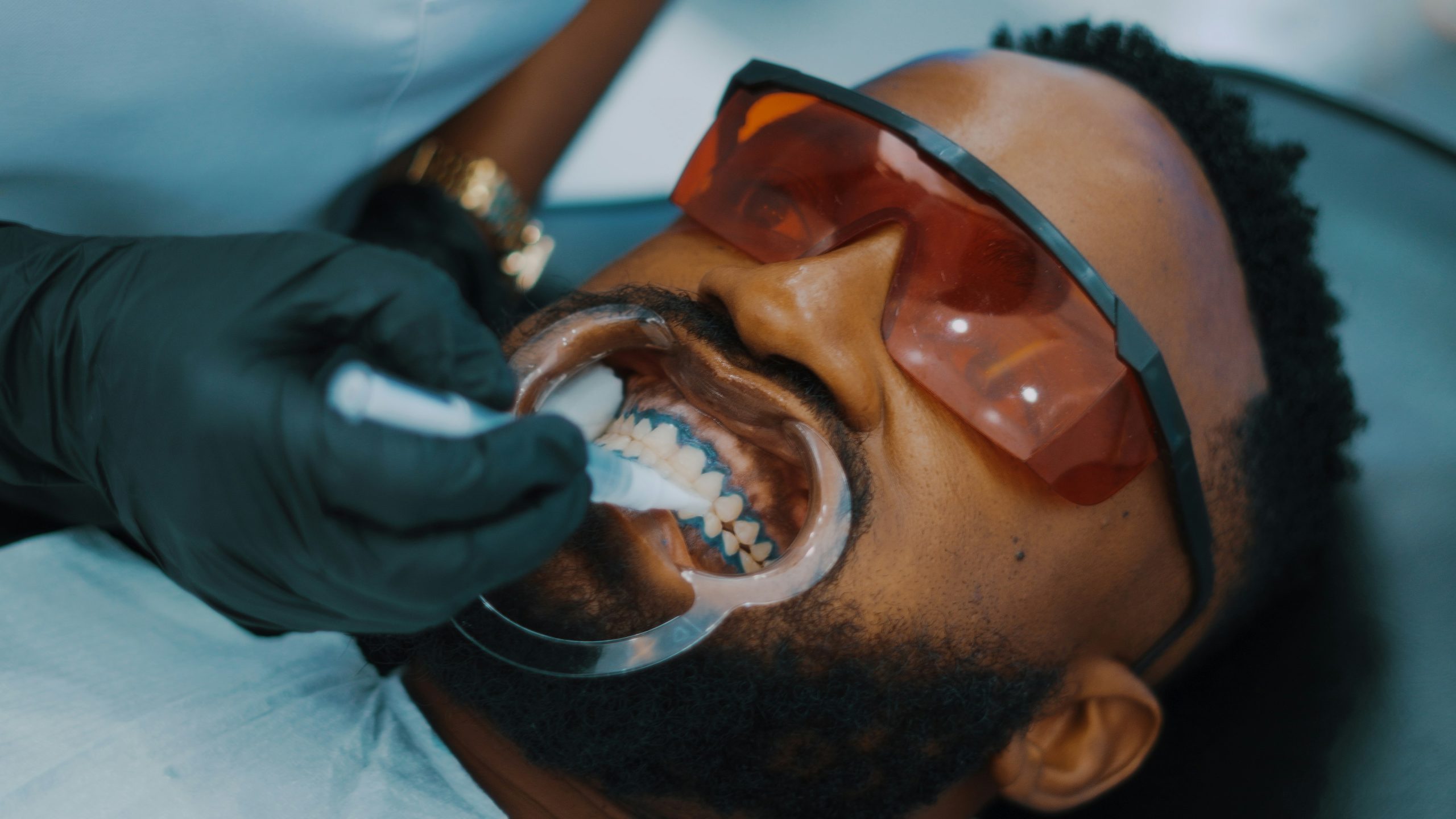
This is the strongest option. Your dentist applies a whitening gel directly to your teeth, sometimes with an LED light to help it work faster, and you leave the same day with noticeably whiter teeth.
Results from in-chair whitening can last anywhere from one to three years.
Where you land in that range comes down mostly to lifestyle: how much coffee or tea you drink, whether you smoke, and how well you look after your teeth day to day.
Someone who’s careful about these things will often see their results hold for much longer than someone who isn’t.
Take-home kits from your dentist: 6-18 months
With this option, your dentist makes custom-fitted trays from a mould of your teeth and sends you home with a whitening gel to use over a couple of weeks. It takes longer to see the full result, but it can get very close to what you’d achieve in the chair.
The big advantage? You keep your trays. When your results start to fade, usually after six to twelve months, you just buy fresh gel and do a short top-up at home. No need to start from scratch.
Whitening strips from the pharmacy: 4-6 months
Strips you buy off the shelf have a much weaker whitening agent than anything a dentist can use. They do work to some degree, but the results are more superficial and they fade faster.
Four to six months is about the best you can expect. They’re fine as a top-up between proper treatments, but they’re not a replacement for them.
What Shortens Teeth Whitening Results
Whitening works by bleaching the chromogens (the pigment molecules) inside the enamel and dentine. Over time, those pigments return. What determines how quickly comes down to a handful of factors, most of which are within your control.
Diet
Coffee and tea are the most common culprits in the UK, and for a lot of people, giving them up entirely isn’t realistic.
Red wine, dark fruit juices, balsamic vinegar, soy sauce, curry, and dark berries all contribute too. The tannins and chromogens in these foods bind to enamel readily, and the acidity in some drinks makes enamel temporarily more porous and susceptible to staining.
You don’t need to cut everything out. But the more of these you consume and the less often you rinse or brush afterwards, the faster your whitening fades.
Smoking and vaping
Tobacco is the single biggest accelerant for staining. Smokers often find their whitening results last a matter of months rather than years, the tar and nicotine in cigarette smoke stain enamel aggressively.
Vaping is sometimes assumed to be harmless for teeth, but the glycerol compounds and coloured additives in some e-liquids do discolour enamel over time, particularly with heavy use.
Oral hygiene
Plaque accumulates every day, and plaque picks up pigment. Consistent brushing and flossing removes this before it has a chance to settle and stain.
People who skip flossing, brush infrequently, or go extended periods without a professional hygiene visit will see their whitening results deteriorate more quickly. Not because of anything to do with the whitening treatment itself, but because of surface staining going unchecked.
Age and intrinsic staining
As teeth age, the enamel thins slightly and the dentine underneath, which is naturally more yellow, shows through more. Intrinsic staining (from the inside out) is less responsive to whitening than surface staining, and tends to return with time regardless of lifestyle.
This is a gradual process, but it does mean older teeth may need more frequent maintenance to stay looking bright.
How to Make Teeth Whitening Last Longer
The first 48 hours matter most
Immediately after whitening, enamel is more porous than usual as the bleaching process temporarily opens the pores in the tooth surface. During this window, pigments from food and drink absorb more readily than normal.
Avoiding staining foods and drinks for 24 to 48 hours post-treatment makes a real difference to how well the results hold initially.
If you’re getting in-chair whitening before an event, time it a few days before rather than the day before. It gives the enamel time to settle and reduces sensitivity.

A few simple daily habits
None of this is drastic, but the cumulative effect is significant:
- Drink through a straw for coffee, tea, cold drinks – it sounds like a small thing, but it genuinely reduces contact with tooth surfaces
- Rinse with water after eating or drinking anything pigmented, especially if you can’t brush straight away
- Brush twice a day with a fluoride toothpaste – a whitening toothpaste a couple of times per week can help with surface maintenance, though use it carefully if your teeth are sensitive (the abrasives can irritate already-thin enamel)
- Floss daily – it takes two minutes and removes plaque from exactly the areas your brush misses
Regular hygiene visits
A professional clean every six months removes the surface staining that builds up even with excellent home care. It also gives your dentist or hygienist a chance to spot anything that might affect your teeth or your whitening results going forward. You can find out more about what a hygienist appointment at Bradstowe involves.
Keep your trays
If you have custom whitening trays, don’t throw them away once your initial course is done. They’re made to fit your teeth precisely, and a top-up course using fresh gel costs considerably less than starting over. Keeping on top of your results with a short top-up every six to twelve months is much easier,and cheaper, than waiting until the whitening has completely faded and starting from scratch.
When to Top Up vs. When to Start Over
The practical question most patients have isn’t really “how long does it last?”, it’s “how will I know when I need to do something about it?”
A few signs that results are starting to fade: your teeth look noticeably more yellow in photographs, the shade against your eyes or clothing looks different to when you finished treatment, or you’re noticing more surface staining building up faster than before.
For most patients, a top-up at the six to twelve month mark keeps things looking consistent. If you’ve kept your trays from a home whitening kit, this is a straightforward process: a short top-up course over a few nights, usually without needing a new appointment.
If it’s been longer than two or three years, or you notice the results have faded significantly, a full re-treatment may give better results than a top-up alone.
Your dentist is the right person to advise on this as it depends on your enamel condition, how much staining has occurred, and which method you used originally.
Professional vs. At-Home Whitening: The Longevity Gap
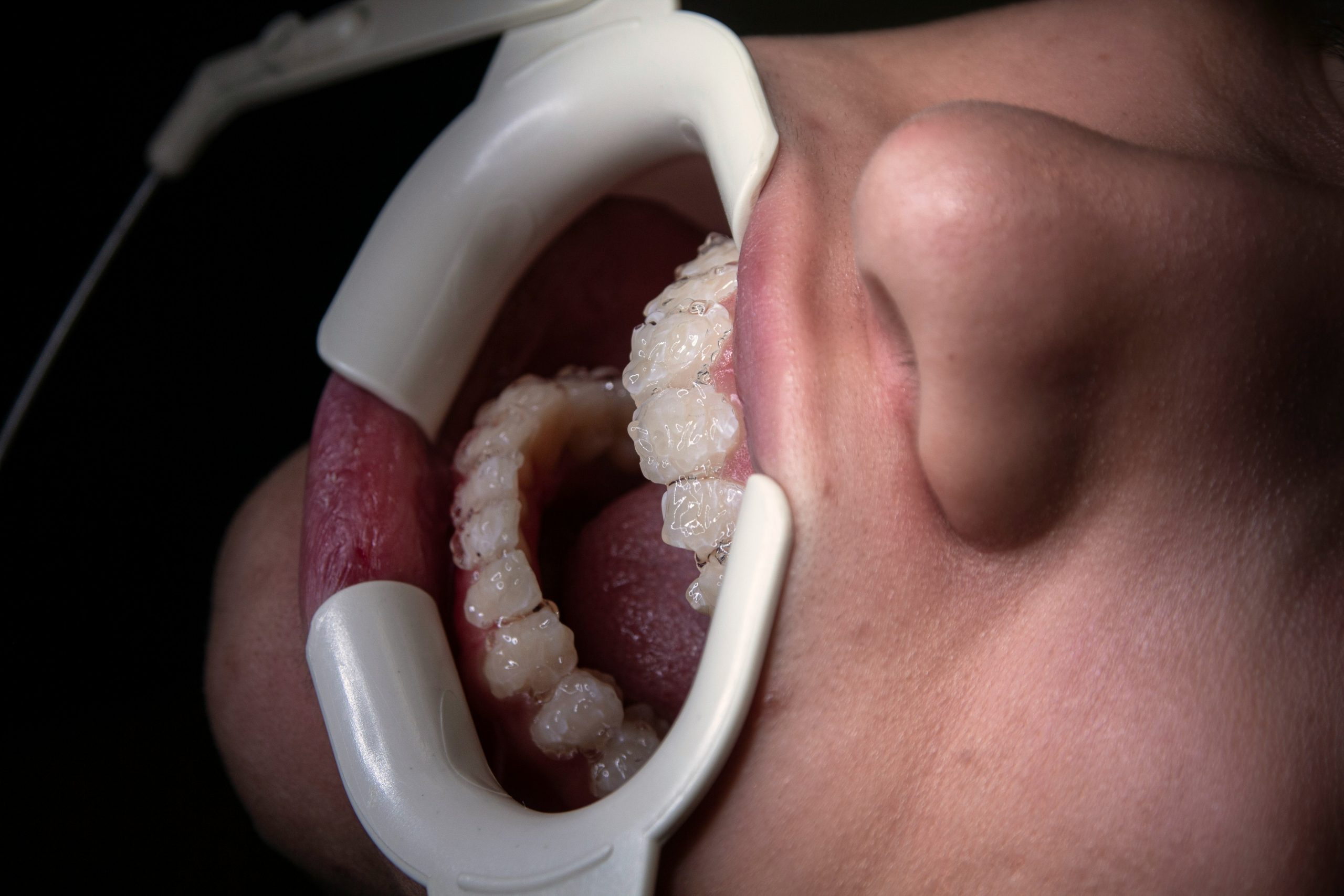
The honest comparison: in-chair power whitening produces deeper results more quickly, and can last up to three years.
Home whitening with professional trays takes longer to work, but with a consistent top-up routine, the longevity gap is narrower than most people expect.
The clearest argument for professional treatment isn’t just how long it lasts, it’s the consistency and reliability of the result. Custom trays and prescription-strength gel, under the guidance of a dentist, give you control over the outcome in a way that OTC products simply don’t.
There’s also the safety element: professional whitening includes an assessment of your enamel condition, any sensitivity issues, and whether whitening is appropriate at all. That’s not something a pharmacy strip can offer.
If you’re considering whitening and weighing up your options, our professional teeth whitening at Bradstowe page covers what we offer and what to expect.
Frequently Asked Questions
How long does professional teeth whitening last?
In-chair power whitening typically lasts one to three years. Home whitening with dentist-prescribed trays lasts six to eighteen months. Lifestyle factors (particularly smoking, coffee and tea consumption, and oral hygiene) have the biggest influence on where in those ranges you land.
How long does Zoom teeth whitening last?
Zoom is a specific LED-activated in-chair system. Like other professional in-chair treatments, results typically last twelve to eighteen months as a baseline, with some patients maintaining results for up to three years with good aftercare and regular top-ups.
How long do whitening strips last?
OTC whitening strips generally last four to six months, and often less with heavy consumption of staining foods and drinks.
They can be useful for light maintenance between professional treatments, but they won’t replicate the depth or longevity of a professionally applied treatment.
Do you need to maintain whitened teeth?
Yes, teeth re-stain over time through diet and daily life. Maintaining results involves brushing twice daily, flossing, regular hygiene appointments, and a professional top-up every six to twelve months.
Rinsing with water after staining drinks and avoiding heavy consumption of coffee, red wine, and tobacco all help extend the time between treatments.
How often should I get teeth whitening top-ups?
Most patients find six to twelve months between top-ups keeps their smile looking consistently bright. Heavier coffee drinkers or smokers may benefit from topping up more frequently.
If you have custom trays from a previous treatment, a top-up course is straightforward and doesn’t require starting from scratch.
Medical disclaimer: The information in this article is for general educational purposes and does not constitute clinical dental advice. Individual results from whitening treatments vary depending on enamel condition, lifestyle, and treatment type. Always consult a qualified dental professional before beginning any whitening treatment. Bradstowe Dental Practice is registered with the Care Quality Commission (CQC).
Thinking About Whitening Your Teeth? We’re Happy to Help
At Bradstowe Dental, we’ve been looking after patients in Woking and across Surrey for over 60 years. When it comes to whitening, we don’t take a one-size-fits-all approach. We start by understanding your teeth, your lifestyle, and what you’re hoping to achieve.
Come in for a chat. We’ll give you honest advice, no pressure, and a clear idea of what’s realistic for you.
Book a free consultation today:
📞 01483 761 784
📍 Chobham Road, Woking, Surrey
We look forward to hearing from you.